
On this page
What are fascia and soffit?
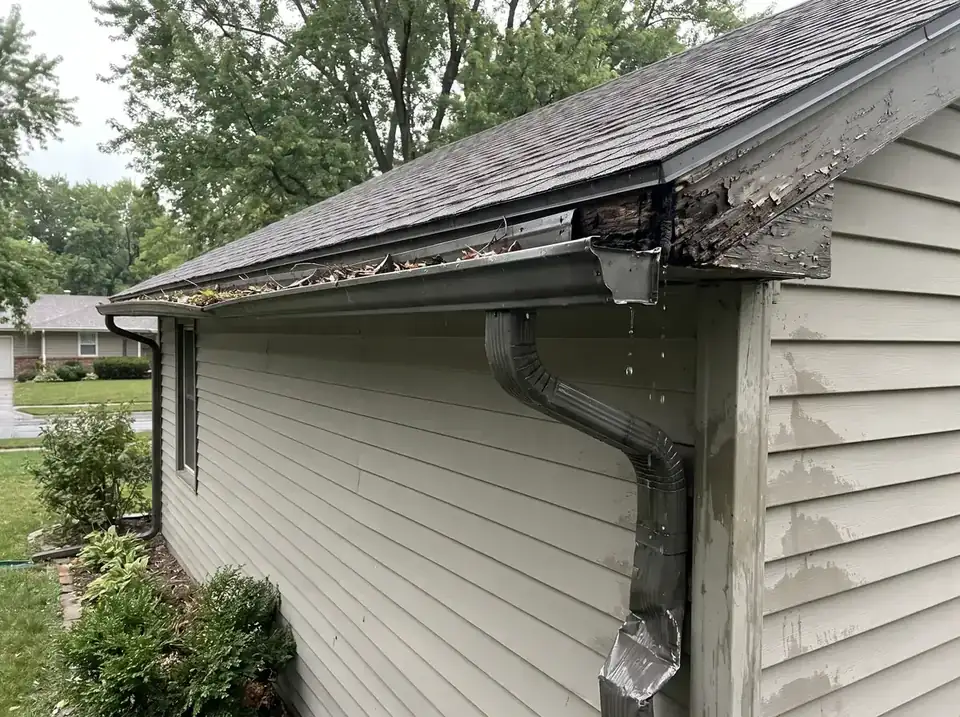
The fascia is the vertical board fixed across the ends of the rafters, along the roof edge. The soffit is the panel that closes the underside of the overhang between the fascia and the wall. Gutters hang on the fascia, so its condition decides how well they stay put.
| Part | Common materials here | Common problems |
|---|---|---|
| Fascia | Painted pine or fir, primed board, aluminum wrap, PVC or fiber cement | Rot behind gutters, peeling paint, split ends |
| Soffit | Vented vinyl, aluminum, painted plywood or board | Sagging panels, rot at the outer edge, animal entry |
| Drip edge | Aluminum or galvanized steel | Missing or too short, letting water behind gutter |
| Rafter tails | Framing lumber | Rot where fascia has failed for years |
How is rotten fascia replaced?
- Remove the gutter. The run comes down carefully so it can be re-hung, or it is replaced.
- Find the extent of the rot. The board is probed and opened to sound wood at each end.
- Check the rafter tails. If the rafter ends are soft, they are sistered or repaired, which may need a carpenter.
- Fit new board. New fascia is cut, primed on all sides and nailed or screwed to the rafter tails.
- Wrap or paint. The board is painted or wrapped in aluminum to match the house.
- Fix the soffit edge. Damaged soffit panels near the fascia are replaced.
- Add drip edge or gutter apron. So water goes into the gutter, not behind it.
- Re-hang the gutter. On screw-in hangers, with steady fall toward the outlets.
Why does fascia rot in Alpharetta?
Water behind the gutter. The most common cause. Many tract homes were built with a short drip edge or none. Water then runs down the back of the gutter and soaks the board.
Clogged gutters. A gutter full of wet pine straw overflows at the back as well as the front, wetting the fascia for days.
Humidity and heat. North Georgia's humid subtropical climate keeps wet wood warm, which suits rot.
Paint failure. Once paint peels on south- and west-facing fascia, rain gets into the grain.
Spike holes. Every spike hole lets water into the board, and spikes are common on houses from the 1980s and 1990s.
Should fascia be wrapped in aluminum?
Wrapping sound fascia in aluminum trim coil saves repainting and protects the wood. Wrapping rotten board hides the problem and lets it spread, so any soft wood must be replaced first. PVC and fiber cement fascia boards are alternatives that do not rot.
| Option | Pros | Cons |
|---|---|---|
| Painted wood | Lowest cost, easy to match | Needs repainting; rots if water gets in |
| Wood wrapped in aluminum | Low upkeep, many colors | Hides rot if installed over bad wood |
| PVC board | Does not rot | Higher cost; expands with heat |
| Fiber cement board | Does not rot, paints well | Heavier, needs careful cutting |
What does fascia repair cost?
Usually priced per foot of board, plus removing and re-hanging the gutter. Rafter tail repair adds more. No published local price is available, so ask for a per-foot rate in writing in case more rot appears once the gutter is off.
How long should new fascia last?
Primed and painted wood fascia can last many years if water stays out of it, which is why drip edge, sound sealant and clean gutters matter. PVC and fiber cement do not rot. Whatever the material, check it whenever the gutters are cleaned.
Fascia and soffit terms
| Term | Plain meaning |
|---|---|
| Fascia | The vertical board across the rafter ends. Every hanger is screwed into it |
| Soffit | The flat underside of the overhang, often vented vinyl or painted board in Alpharetta subdivisions |
| Rafter tail | The end of a roof rafter where it passes the wall line, hidden behind the fascia |
| Drip edge | Bent metal trim along the roof edge, tucked under the bottom shingles, that steers runoff into the trough instead of onto the board |
| Gutter apron | A wider flashing that runs up under the shingles and hangs down inside the back of the gutter to close the gap |
| Hidden hanger | A clip that sits inside the gutter under the front lip and screws through the back into the fascia |
| Spike and ferrule | A long nail driven through the gutter face and a metal tube, the fixing used on many 1980s and 1990s houses here |